Oct 17, 2026 IN PERSON Info Session - 10:30-11:30am Lakewood Library
Four Paths to a Sustainable Future: Net Zero, Passive House, LEED, and Zero Carbon Explained
Learn the key differences between Net Zero, Passive House, LEED, and Zero Carbon building—and discover how each standard can shape healthier, more resilient, and climate-smart communities like Gratitude Village Colorado. This in-depth guide explains operational energy, embodied carbon, airtight design, high-performance building envelopes, and holistic sustainability frameworks to help readers understand which combination of approaches can support affordability, comfort, and long-term environmental stewardship. Whether you're exploring green building options or planning an eco-friendly cohousing development, this article offers a clear, accessible overview of today’s most influential sustainable building pathways.
Gratitude Village
12/20/20254 min read
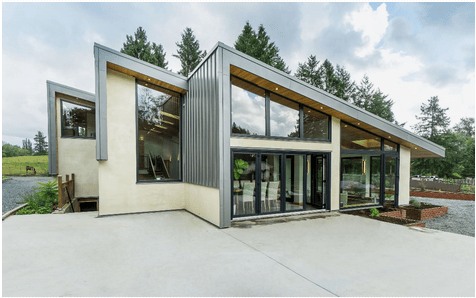
As Gratitude Village grows, so does our collective commitment to building a community that truly reflects our values—connection, resilience, affordability, and deep care for the planet. We often talk about creating a “sustainable” cohousing neighborhood, but sustainability can mean many things. Over the last several months, our founders and board have explored different building standards that could guide our design choices. Four terms come up again and again: Net Zero, Passive House, LEED and Zero Carbon. Each one represents a different approach to building responsibly, and all of them could play a role in shaping the future of Gratitude Village. Understanding the differences can help our community make informed, values-aligned decisions as we move toward land selection and architectural design.
Let’s begin with Net Zero, one of the most widely recognized standards today. A Net Zero home or building is designed so that, over the course of a year, it produces as much renewable energy as it consumes. This is usually achieved through high-efficiency design, solar panels and smart mechanical systems. The focus is largely on operational energy: heating, cooling, hot water, lighting and appliances. Net Zero buildings are typically well-insulated, airtight and incredibly efficient, which also makes them more comfortable for residents and reduces long-term utility costs. For a community like ours—where affordability and predictable monthly costs matter—Net Zero offers huge benefits.
Yet Net Zero doesn’t tell the whole story. While it captures how a building performs, it doesn’t account for the climate impact of the materials used to construct it. That’s where Zero Carbon comes in. A Zero Carbon building looks at the full carbon footprint, including both operational energy and the “embodied carbon” in the materials themselves. Embodied carbon includes everything from concrete and steel to insulation, drywall, and cabinets. These materials can release large amounts of carbon during manufacturing, transport, and installation—often before a building is ever occupied. By addressing embodied carbon, Zero Carbon design encourages the use of low-carbon or carbon-storing materials such as mass timber, hempcrete, wood fiber insulation or recycled steel. For communities committed to long-term climate responsibility, Zero Carbon goes beyond energy efficiency and confronts the upfront environmental cost of construction.
Somewhere between these two concepts sits LEED, one of the world’s most comprehensive sustainability rating systems. LEED (Leadership in Energy and Environmental Design) evaluates a long list of building features: energy performance, water efficiency, indoor air quality, materials, waste reduction, transportation, landscape ecology, and innovation. It doesn’t focus solely on carbon or energy, but instead looks at sustainability as an integrated system. LEED-certified buildings often have better ventilation, healthier materials, more efficient water fixtures and thoughtful site design. With LEED v4.1, the newest version of the standard, there is now strong emphasis on reducing embodied carbon and increasing energy performance—making it a valuable partner for projects pursuing Net Zero or Zero Carbon. Buildings can even achieve LEED Zero Carbon, an advanced designation that verifies total carbon neutrality after certification.
While Net Zero, Zero Carbon, and LEED each offer their own strengths, Passive House (or Passivhaus) brings another layer of depth—one focused almost entirely on energy conservation and comfort. Passive House standards require buildings to meet extremely rigorous thresholds for insulation, airtightness, window performance and mechanical ventilation. A Passive House relies on the building envelope (the walls, roof, and windows) to maintain steady temperatures with very little energy use. In many climates, a Passive House can stay warm through the winter and cool in the summer with minimal heating or air-conditioning. This leads to incredibly low energy bills, excellent indoor air quality and consistent, draft-free comfort. Unlike LEED, which takes a broad sustainability approach, Passive House is laser-focused on operational performance and indoor environmental health. It’s one of the most reliable ways to achieve Net Zero or near-Zero energy.
Each standard has unique strengths, and none of them compete with one another. In fact, they often work best when combined. A building can be Passive House certified and Net Zero. It can be LEED-certified and Zero Carbon. It can follow Passive House principles while using LEED’s materials credits and pursuing a Zero Carbon goal. The real question isn’t which is “best”—it’s which combination aligns most closely with Gratitude Village’s mission of building an affordable, multigenerational, climate-smart community.
As we evaluate these paths, our values can guide us. Affordability is a critical component of our vision, and design choices have long-term financial implications. Passive House can lower energy bills dramatically, but requires extremely precise construction. Zero Carbon materials can reduce climate impact, but some are more expensive or require specialized expertise. LEED certification adds credibility, health benefits and improved performance, but it also involves documentation and third-party review. Net Zero ensures predictable monthly energy costs, which can support both renters and homeowners. Each approach offers benefits—and each comes with tradeoffs.
The exciting opportunity for Gratitude Village is that we don’t have to choose just one standard. We can create a customized approach that blends the best aspects of all four. Our common house, for example, might pursue LEED certification to ensure excellent ventilation, sustainable materials, water conservation, and long-term performance. Our homes might follow Passive House principles to create year-round comfort and minimize energy use. As a community, we might commit to Net Zero operational energy, ensuring that our solar arrays generate as much energy as we use. And for long-term climate responsibility, we can explore embodied carbon reduction strategies that move us closer to a Zero Carbon future.
Another important aspect of this discussion is community education. One of the most powerful parts of cohousing is learning together and making decisions that reflect shared values. By exploring these standards now—before land acquisition and schematic design—we strengthen our culture of curiosity, collaboration, and intentionality. These conversations help us imagine not only what Gratitude Village will look like, but how it will function, how it will feel to live in, and what legacy it will leave for future generations.
Ultimately, our goal isn’t simply to build “green buildings.” It’s to build a community ecosystem where people of all ages and abilities can thrive, supported by healthy homes, thoughtful design, and a deep respect for the natural world. Whether we choose Net Zero, Passive House, LEED, Zero Carbon, or a combination of all four, every step we take brings us closer to a village that reflects our mission: living with purpose, with people, and with the planet in mind.
COMMUNITY
Join us in embracing nature, diversity and connection.
Sustainability
DIVERSITY
info@gratitudevillageco.com
720-689-4821
© 2026. All rights reserved.
AFFORDABILITY
Gratitude Village Inc. is a 501(c)3 charitable corporation (public charity) that values diversity, equity and inclusion as essential to our mission. EIN #33-2499522
Subscribe to our Substack
Refund Policy
Gratitude Village is a Proud Member of these organizations