Oct 6, 2026 Zoom Info Session - register to get link 5:00-6:00pm
Shaping the Village Together: Inside Our First Cohousing Site Design Workshop
Designing a cohousing community looks very different from designing a typical neighborhood. At Gratitude Village Colorado, we're creating Colorado's first Zero Energy, multigenerational cohousing community in Brighton, where future residents actively participate in designing not only their homes, but the shared spaces and relationships that will shape daily life. During our first Site Design Workshop, Founding Members worked alongside architects to explore how thoughtful neighborhood design can foster connection, accessibility, sustainability, and belonging. Instead of beginning with streets and buildings, we began by asking a simple but powerful question: What kind of life do we want to create together? That question led us on an extraordinary weekend of community planning, collaboration, and discovery—one that brought our vision of an intentional community one step closer to reality.
Gratitude Village
6/28/20266 min read
How do you design a community?
Not just a collection of homes, but a place where children can safely roam, neighbors know one another, older adults can age with dignity, and people experience a genuine sense of belonging.
That was the question our Founding Members and the architects from Studio CoHab spent an entire weekend exploring during our first Site Design Workshop. While most people imagine architects beginning with roads, buildings, and parking lots, we began somewhere very different.
We started by asking ourselves how we wanted life in Gratitude Village to feel.
Most development projects begin with roads, lot lines, utilities, and building footprints. We began with people.
Using a framework called Goals, Activities, and Places (GAPs), we explored what we hoped people would experience in Gratitude Village before we ever discussed where to put a single home.
We started by identifying our goals. What did we want daily life to feel like? The answers came quickly: watching children play safely, feeling a sense of peace and sanctuary, connecting with nature, seeing neighbors naturally throughout the day, having opportunities for both community and privacy, growing food together, creating a rich multi-sensory environment, living among multiple generations, enjoying animals, and sharing meaningful activities and celebrations.
Those weren't architectural decisions. They were decisions about how we hope to live together.
From there, we asked a second question: What activities help create those experiences?
Walking. Reading. Bird watching. Stargazing. Gardening. Listening to flowing water. Smelling flowers. Walking dogs. Watching bees and butterflies. Sitting quietly beneath a tree. Sharing conversations on a porch.
Only after exploring those activities did we begin asking where they could happen. Front porches. Shared courtyards. Garden paths. Outdoor nooks. Community gardens. The Common Terrace. The magnificent grove of heritage cottonwood trees. Places where neighbors naturally cross paths, where solitude is respected, and where community has room to grow.
That shift changed the entire conversation. Instead of asking, "Where should we put the buildings?" we found ourselves asking, "Where will life happen?"
Listening to the Land
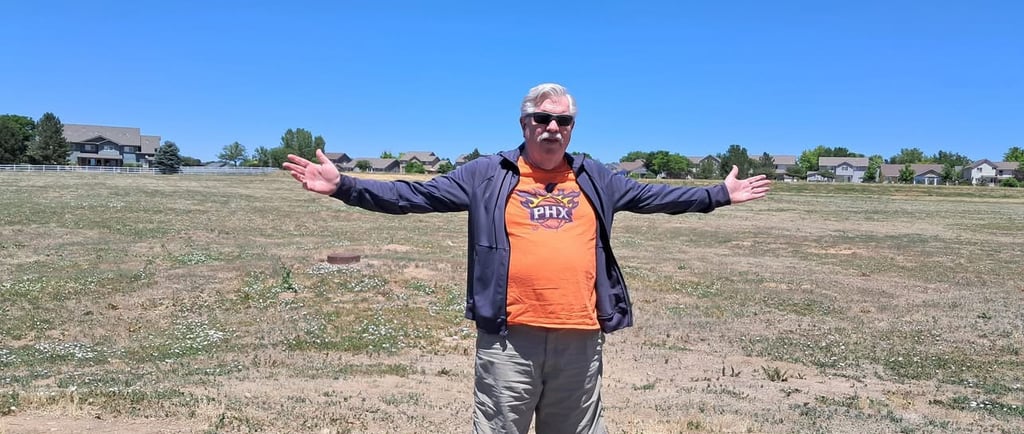
After a morning of envisioning community, we packed up and headed to the property for a picnic lunch beneath the shade of a beautiful grove of heritage cottonwoods.
There, we gathered for a blessing ceremony, acknowledging the land, those who cared for it long before us, and setting our intention to become worthy stewards of this place.
One of the most meaningful activities followed. Each person dropped a small stone onto a map of the property. Wherever your stone landed became your place. For ten minutes, each of us simply sat or stood, listened, watched, and paid attention before coming back together to share what we had experienced.
Some locations felt peaceful and quiet. Others were alive with birdsong and the sound of wind moving through the cottonwoods. Some felt open and expansive, while others reminded us of the nearby activity along Bromley. The exercise wasn't about finding the "best" spot. It was about learning to listen to what the land was already telling us.
In many ways, it felt less like we were choosing a site and more like we were getting to know it.
We also explored another deceptively simple question: How close do we actually want to live to one another?
Rather than relying on conventional subdivision standards, we physically experimented with distance. What felt too close? What felt too isolated? By the end of the exercise, the group discovered that somewhere between fifteen and thirty feet created the balance we were seeking—close enough for spontaneous connection while still allowing everyone to enjoy a comfortable sense of privacy.
Designing Community Is Hard Work
One thing surprised almost everyone.
We expected the weekend to be enjoyable. We didn't expect it to be so mentally and even physically demanding.
Every decision required balancing multiple values at once. If we moved one building, what happened to the courtyard? If we expanded the gardens, what happened to accessibility? If we added more homes, how did that affect open space? Every choice influenced five others.
By Sunday evening, when we finally concluded the workshop, we were mentally exhausted—but also energized.
While our architects and development professionals bring years of experience to this process, most of the Founding Members had never participated in designing a neighborhood before. Yet there we were, wrestling with many of the same questions planners and architects face every day—not to create the most efficient site plan, but to create the best possible life for the people who will one day call Gratitude Village home.
The Land Surprised Us Too
Another surprise was the land itself.
We've spent weeks talking about these 7.81 acres in Brighton. We've reviewed surveys, environmental reports, geotechnical studies, zoning maps, and aerial photographs. But spending several hours there changed something.
Sitting next to the heritage cottonwoods, listening to birds, feeling the breeze coming off the irrigation ditch, and experiencing the unique character of different parts of the property reminded us that this isn't simply a parcel of land waiting to be developed.
It already has an identity.
Our job isn't to impose a neighborhood onto the land.
Our job is to create a community that belongs there.
From Ideas to Possibilities
Saturday afternoon and all day Sunday, the workshop shifted from vision to design.
Using architectural blocks representing homes, garages, the Common House, and other shared spaces, small groups created entirely different layouts for the community. We then stepped back and evaluated each one together. What worked well? What didn't? Which layouts encouraged connection, and which unintentionally created barriers? Most importantly, how well did each design support the goals we had identified together?
After each discussion, we took everything apart and started again. With every new layout, fresh insights emerged, new ideas came forth and slowly a shared vision began to take shape.
By Sunday evening, although we knew the design would continue to evolve over many months, we had reached consent on several foundational decisions that will guide the next phase of planning. That didn't mean everyone got their first choice. It meant we had listened carefully enough to create a direction that everyone could genuinely support.
We affirmed a vision for a community of approximately 40 to 60 homes. We agreed on four primary housing types that support a diverse mix of ages, abilities, and family structures: single-story cottage-style duplexes, two-story townhomes with accessible main-floor living, stacked flats with accessible first-floor homes, and smaller one-bedroom homes above garages or neighborhood-serving retail.
Most importantly, we discovered a site layout that finally felt like Gratitude Village. The grove of heritage cottonwoods became the heart of the community. Facing the grove sits the Common House—the living room of the neighborhood. Radiating outward are four smaller clusters, or pods, of homes organized around shared courtyards. Parking moves primarily to the edges, allowing people—not cars—to shape daily life within the village.
The sketches that will be created from this weekend are far from the final design. Engineering, utilities, drainage, accessibility, city requirements, and many other considerations will continue to refine the plan. But for the first time, we could all see not just individual homes, but an entire neighborhood beginning to emerge.
There was a sense of excitement in the room that was difficult to describe. We were mentally tired, but no one seemed eager to leave. For the first time, many of us could actually picture ourselves walking these paths, sharing meals in the Common House, watching children play beneath the cottonwoods, and greeting neighbors on front porches. The vision had become something we could all see.
More Than a Site Plan
By Sunday evening, something much bigger than a site plan had emerged.
We had certainly made tremendous progress on the physical design of the community, but something else had happened as well. Every Founding Member had contributed to shaping the vision. Every voice had influenced the outcome. We weren't simply designing a neighborhood anymore—we were beginning to build the culture that will one day make Gratitude Village feel like home.
Every decision traced back to the same question: What kind of life do we want to create together?
That's what makes cohousing different. We're not simply designing homes or a neighborhood. We're designing opportunities for children to play safely, for neighbors to know one another, for older adults to age in community, for nature to remain central to daily life, and for belonging to happen by design—not by accident.
This fall, our Founding Members will continue that work through Common House and private home design workshops, where we'll begin shaping not only the buildings themselves but the places where daily life will unfold.
Step by step, conversation by conversation, and decision by decision, the vision is becoming a village.
Every Village Has a Beginning
As our blessing ceremony came to a close, each of us chose a small stone. Holding it quietly in our hands, we reflected on two simple questions:
What intention do I hold for this community?
What gift do I hope Gratitude Village will offer the world?
One by one, we placed our stones into a basket and stated those intentions out loud for the community and the heavens to hear.
That basket now rests quietly, waiting for another day.
Years from now, when Gratitude Village is complete and we celebrate our Grand Opening, those same stones will return. They will remind us that before there were homes, sidewalks, gardens, and front porches, there was simply a group of people gathered around a shared vision, imagining what this place could become.
Every village has a beginning.
This was ours.
Next time: We'll explore how a community begins to form long before the first home is ever built.
COMMUNITY
Join us in embracing nature, diversity and connection.
Sustainability
DIVERSITY
info@gratitudevillageco.com
720-689-4821
© 2026. All rights reserved.
AFFORDABILITY
Gratitude Village Inc. is a 501(c)3 charitable corporation (public charity) that values diversity, equity and inclusion as essential to our mission. EIN #33-2499522
Subscribe to our Substack
Refund Policy

Gratitude Village is a Proud Member of these organizations