Zoom Info Session Tuesday August 4, 2026 5:30-6:30pm Register for Link
The Architecture of Isolation
Modern suburban neighborhoods were designed for privacy and independence — not for belonging. In The Architecture of Isolation, we explore how housing design shapes human connection, why proximity isn’t the same as community, and how loneliness may be as much architectural as emotional. Drawing from lived experience and public health research, this piece reframes social isolation as a systems issue — and introduces cohousing as a practical, design-based solution that supports connection, accessibility, affordability, and interdependence without sacrificing privacy.
Gratitude Village
3/7/20263 min read
We live closer together than ever before — and feel more disconnected than ever.
Our neighborhoods are full. Driveways are full. Calendars are full. Social media feeds are full. And yet, beneath the surface, something essential is thinning. The U.S. Surgeon General has named loneliness a public health epidemic. Rates of anxiety and depression continue to rise. More adults report feeling unseen, unsupported, or socially isolated — even while living among others.
I don’t believe this is a moral failure. I believe it is a design failure.
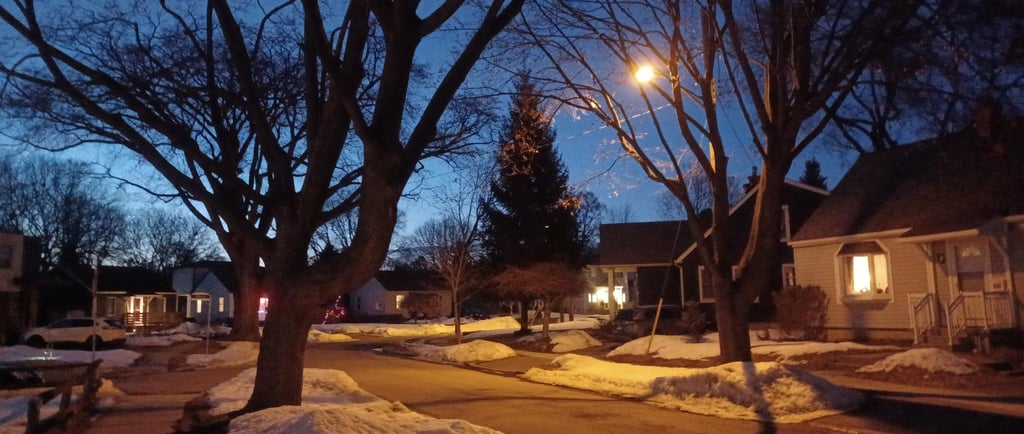
Most modern suburban neighborhoods were never designed for connection. They were designed for privacy, efficiency, and independence. Homes face streets, not one another. Garages dominate front facades. Fences define property lines. Backyards become private retreats. Our daily lives unfold behind closed doors, and interaction becomes optional — something that requires intention, energy, and scheduling.
Connection, in this model, is extracurricular.
You can live beside someone for fifteen years and never truly know them. You can exchange names, wave during evening walks, comment on the weather and still remain fundamentally separate. Proximity is not the same as belonging.
I’ve experienced this myself. After nearly fifteen years in my neighborhood, I know more than a hundred neighbors by name — and many of their kids and their dogs. We chat. We smile. We coexist kindly. But when I disappeared from our usual daily rhythm for two months while caring for my older dog after surgery, no one reached out. No one asked if everything was okay.
No one did anything wrong.
That’s the point.
The system functions exactly as designed.
In traditional neighborhoods, noticing someone’s absence is unusual. Life is private by default. We hesitate to intrude. We assume others are busy. We don’t want to overstep. And so we remain in our lanes — friendly but functionally independent. This model works beautifully when everyone is healthy, mobile, and self-sufficient.
But what happens when life happens?
When there’s surgery.
When a parent ages.
When a child struggles.
When someone loses a job.
When grief enters quietly.
In a neighborhood structured around privacy, support must be requested. And requesting support is vulnerable. There's a risk of rejection. Many people simply won’t ask.
We often frame loneliness as an emotional issue — something to solve with therapy, self-help or better communication. But what if loneliness is also architectural? What if the way we design housing shapes the way we experience belonging?
Physical space influences human behavior more than we realize.
If front doors face sidewalks where neighbors naturally pass, conversations increase. If homes cluster around shared green space, children play collectively instead of in isolation. If a common house anchors the community, shared meals become routine instead of rare. When daily life creates organic touchpoints, noticing someone’s absence becomes natural.
Not surveillance.
Awareness.
The difference between isolation and belonging is often structure.
In cohousing communities, privacy still exists. Homes are fully self-contained. Doors close. Families retreat. Shades can be drawn. But the design encourages overlap — not through obligation, but through proximity with purpose. Shared gardens. Shared meals. Shared work days. Spaces intentionally created for gathering rather than avoidance.
Belonging stops being accidental.
It becomes supported.
This matters deeply as we age. It matters for families raising children. It matters for adults with disabilities. It matters for first-time homebuyers seeking stability. Independence is valuable. Autonomy is important. But independence without interdependence eventually becomes fragility. We are strongest when we are woven together - just like the multiple strands of a climbing rope.
The loneliness we don’t talk about isn’t dramatic. It’s subtle. It’s the slow normalization of living parallel lives. It’s knowing dozens of people but relying on none. It’s waving from driveways without knowing who would show up if you needed them.
Again — this isn’t about blaming neighbors. It’s about recognizing that most neighborhoods were designed for a different era. One that prioritized separation as safety and privacy as progress.
But our needs are evolving.
We are living longer. Families are stretched thinner. Housing costs are rising. Climate pressures are increasing. The old model — every household an island — is showing its cracks.
At Gratitude Village, we are asking a different question:
What if we designed neighborhoods that made connection easier?
What if accessibility was universal, not an afterthought? What if up to 50% of homes were permanently affordable? What if daily life included natural rhythms of shared meals, shared green space, and mutual support — without sacrificing privacy?
What if noticing someone’s absence was normal?
The architecture of isolation didn’t emerge because people stopped caring. It emerged because we built environments that make caring harder to practice.
We can build differently.
And when we do, something remarkable happens. Children gain safe independence. Seniors age with dignity. Adults support one another through life’s inevitable disruptions. Belonging becomes embedded in the structure itself.
Not forced.
Not performative.
Simply present.
If you’ve ever felt that quiet disconnection — even in a “good” neighborhood — you are not broken. You may simply be living inside a design that was never meant to sustain deep community.
The good news? Architecture can change. And when architecture changes, so does culture.
COMMUNITY
Join us in embracing nature, diversity and connection.
Sustainability
DIVERSITY
info@gratitudevillageco.com
720-689-4821
© 2026. All rights reserved.
AFFORDABILITY
Gratitude Village Inc. is a 501(c)3 charitable corporation (public charity) that values diversity, equity and inclusion as essential to our mission. EIN #33-2499522
Subscribe to our Substack
Refund Policy


Gratitude Village is a Proud Member of these organizations