Sept 24, 2026 Zoom Info Session - register to get link 5:00-6:00pm
The Day We Build Something Together
In The Day We Build Something Together, we explore how shared work days in cohousing communities foster ownership, connection, and long-term affordability. This piece examines the social and financial benefits of collective stewardship — from planting gardens and maintaining shared spaces to building pride through participation. It highlights how work events strengthen intergenerational relationships, reduce costs in mixed-income communities, and transform residents into co-creators of their environment. Discover how contribution builds belonging — and why shared labor may be essential to sustainable community living.
Gratitude Village
3/19/20263 min read
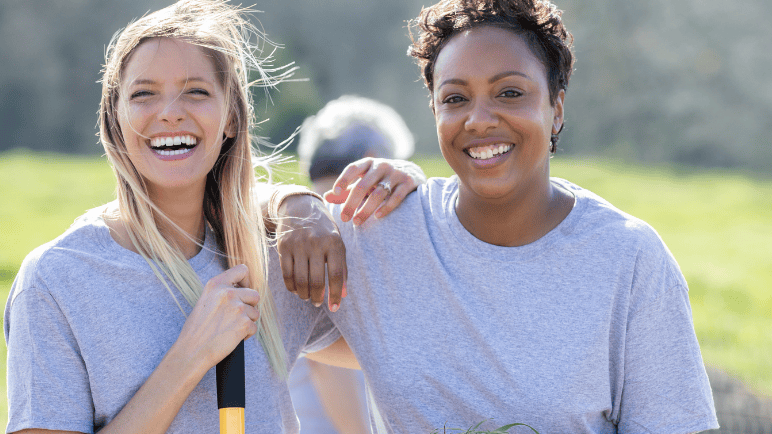
There is a particular kind of tired that feels good. It settles into your muscles after hours of lifting, digging, planting, sanding, painting, or assembling. It comes with dirt under your fingernails and a streak of sweat across your forehead. It is the kind of tired that ends with shared laughter and a meal that tastes better than usual.
It is the tired that comes from building something together.
In most traditional neighborhoods, we outsource nearly everything. Landscaping. Maintenance. Repairs. Community events. We pay dues, hire contractors, and go back inside. Efficiency replaces participation. The system works — but it keeps us separate from the spaces we inhabit.
In cohousing, something different happens.
Work days are built into the rhythm of community life. They aren’t punishment. They aren’t forced labor. They are invitations. A few hours on a Saturday to plant trees, assemble raised garden beds, repaint a common space, clear a pathway, install shelving, organize tools, build a playground feature or prepare the common house for an event.
People show up in jeans and gloves. Coffee thermoses appear. Someone brings muffins. Tasks are assigned, but fluid. Children run between groups, sometimes helping, sometimes playing. Elders sit nearby sorting seeds or offering guidance.
And slowly, the space begins to change.
A fence goes up. A garden bed fills. A bench appears beneath a tree. The common room takes on fresh color. The playground grows sturdier. The compost bins expand.
And something else grows, too.
Ownership.
When you have carried the lumber, tightened the bolts, spread the mulch or painted the walls, the space no longer feels abstract. It is not “the development.” It is not “the HOA.” It is not “management’s responsibility.” It is ours.
Psychologists call this the IKEA effect — we value what we help build. But in community, it goes deeper than valuation. It becomes identification. The garden thrives because we planted it. The common house feels warm because we shaped it. The playground feels safe because we assembled it together.
Participation builds pride.
It also builds relationship.
There is something uniquely bonding about working side by side. Conversation flows differently when hands are busy. Stories surface naturally. Skills are revealed. Someone is surprisingly good with tools. Someone else knows exactly how to organize materials. Someone brings humor to the hard tasks. Someone quietly keeps the group steady.
You learn people differently when you work with them.
And then there is the practical side.
Shared labor reduces costs.
When residents contribute to landscaping, garden installation, light maintenance, painting, organizing, or event setup, expenses drop. That matters in a mixed-income community. That matters when you are committed to affordability. Every dollar saved through shared effort is a dollar that doesn’t have to be passed on in monthly dues.
But the financial benefit, while real, is not the only point.
The deeper benefit is dignity.
In a culture that often defines value by income, community work days remind us that contribution comes in many forms. A retired neighbor who cannot lift heavy materials might organize tools. A teenager might haul mulch. A parent might coordinate snacks. Someone with carpentry skills teaches others. Someone with gardening knowledge shares expertise.
Everyone brings something.
And when everyone brings something, hierarchy softens.
Children witness adults cooperating. They see shared responsibility modeled. They experience a place where maintenance isn’t invisible — it is collective. They learn that community isn’t something you consume. It’s something you help create.
This matters.
So many of us move into neighborhoods and never meet the people who built them. We inherit finished spaces. We live in them privately. We leave maintenance to professionals.
But imagine the difference if you helped build the raised beds where vegetables grow. If you planted the trees that will shade the courtyard in ten years. If you painted the walls where shared meals will be served. If you installed the benches where elders will sit and watch children play.
That memory changes how you walk through a space.
At Gratitude Village, we envision regular work days woven into the life of the community. Not constant. Not overwhelming. Just enough to keep us connected to the physical environment we share.
Some projects will be large. Others small. Some will be celebratory — like building a new garden feature. Others practical — like seasonal maintenance. All of them will reinforce a simple truth:
We are not just residents.
We are stewards.
The day we build something together, we stop being neighbors who happen to live near one another. We become collaborators. Co-creators. Participants in a shared experiment of belonging.
There will still be professionals. There will still be contractors for large-scale infrastructure. This is not about doing everything ourselves. It is about refusing to outsource all responsibility for the spaces that shape our daily lives.
Because when we build something together, something builds within us.
Trust.
Confidence.
Pride.
Connection.
And at the end of the day — when the tools are put away and someone suggests ordering pizza or sharing a meal in the common house — the tired feels different.
It feels earned.
It feels shared.
It feels like home.
COMMUNITY
Join us in embracing nature, diversity and connection.
Sustainability
DIVERSITY
info@gratitudevillageco.com
720-689-4821
© 2026. All rights reserved.
AFFORDABILITY
Gratitude Village Inc. is a 501(c)3 charitable corporation (public charity) that values diversity, equity and inclusion as essential to our mission. EIN #33-2499522
Subscribe to our Substack
Refund Policy

Gratitude Village is a Proud Member of these organizations