Sept 24, 2026 Zoom Info Session - register to get link 5:00-6:00pm
What If We Weren’t Meant to Live This Way?
What if modern neighborhoods are designed for isolation? Discover a new cohousing community being built in Brighton, CO and a more connected way to live near Denver.
Gratitude Village
5/3/20264 min read
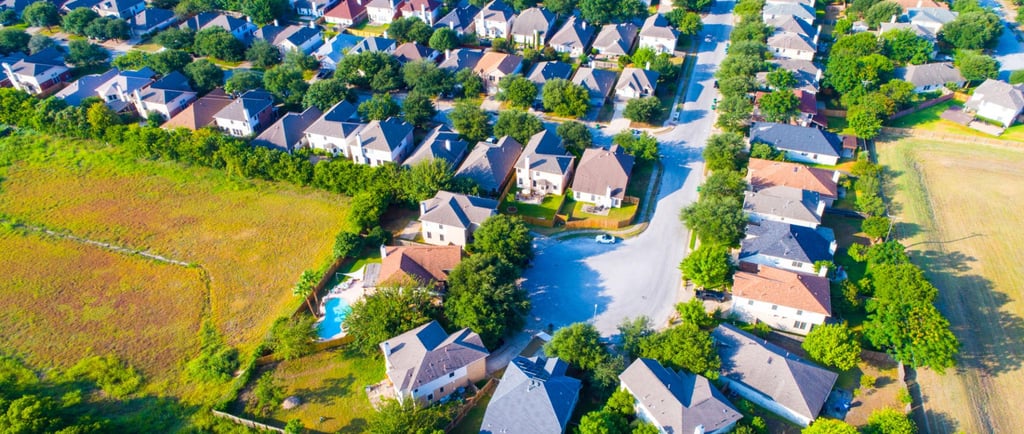
The other day, I pulled into my driveway after a full day—garage door up, car in, garage door down. I sat there for a moment before going inside. Everything was quiet. The house was quiet, the neighborhood was quiet, and on the surface, everything was exactly as it should be. And yet, something about it felt incomplete.
It struck me how easy it is to move through an entire day without really interacting with anyone in a meaningful way. To live surrounded by people and still feel like we’re doing life mostly on our own. That realization stayed with me longer than I expected, and it led me back to a question I find myself asking more and more often: What if we weren’t meant to live this way?
We’ve been taught that independence is the goal. That success looks like having your own space, your own schedule, your own everything. There’s a subtle but powerful message woven into our culture that needing less from others somehow means we’ve made it. But when you step back and really look at how we’re living, something doesn’t quite add up.
We are more connected than ever digitally, yet many people feel deeply disconnected in their daily lives. We wave across driveways, schedule time weeks in advance to see friends, and carry the weight of work, parenting, and life largely within the walls of a single household. It’s become so normalized that we rarely question it, but this version of “normal” is actually very new.
For most of human history, life didn’t happen in isolation. It happened in small, overlapping communities where daily life was shared. Children moved between homes, meals were shared, and people noticed when something was off—not because you told them, but because they saw you regularly. Support wasn’t something you had to formally request; it was simply part of the fabric of everyday life.
Somewhere along the way, we designed that out. Not intentionally, but systematically. We built neighborhoods around cars instead of people, prioritized privacy over proximity, and created homes that function beautifully as individual units but rarely as part of something larger. And then we wonder why so many people feel alone, why parenting feels overwhelming, and why even strong, capable individuals feel like they’re carrying more than they were meant to carry.
What if the problem isn’t us? What if it’s the way we’ve designed the environments we live in?
This is the question behind the growing interest in cohousing communities, intentional communities in Colorado, and alternative housing models across the country. More and more people are exploring cohousing in Denver and nearby communities as they look for a more connected and sustainable way of living. These neighborhoods are designed to support connection, not just proximity, offering a model where people live in private homes but share common spaces, resources, and daily interactions that foster relationships over time.
In a cohousing community, connection isn’t left to chance. Walkable pathways, shared courtyards, and a central common house naturally bring people together. Shared meals, informal gatherings, and everyday interactions create opportunities for relationships to grow organically. At the same time, residents maintain full privacy in their own homes, allowing for a balance between independence and community.
When I imagine a different kind of neighborhood, I don’t picture perfection. I picture proximity. Walking paths instead of fences, shared spaces that invite interaction, and homes that offer both privacy and connection. I imagine stepping outside and seeing familiar faces, where relationships form not because they’re scheduled, but because your lives naturally intersect.
For many people exploring cohousing in Brighton, Colorado, or looking for intentional community options near Denver, something about this idea feels immediately familiar. Not because it’s new, but because it reflects a way of living that has existed for generations. It taps into a deeper understanding that humans are wired for connection and that our environments play a powerful role in shaping how we experience daily life.
I’m not suggesting this is the only way to live, but it is worth asking whether life could feel a little less isolated and a little more shared. What if support wasn’t something that only showed up in moments of crisis, but something built into the rhythm of everyday life? What if the place you lived actually made your life easier, more connected, and more supported?
At Gratitude Village Colorado, we are exploring these questions in a real and tangible way. We are developing a multigenerational, mixed-income cohousing community in Brighton, Colorado, just outside of Denver, designed around connection, sustainability, accessibility, and belonging. Rather than leaving relationships to chance, the physical layout and shared spaces are intentionally designed to support interaction, collaboration, and mutual support.
This approach doesn’t eliminate the challenges of life, but it does change how those challenges are experienced. Instead of navigating everything alone, people are part of a network of relationships that offer support, perspective, and connection. Over time, that can lead to greater well-being, resilience, and a stronger sense of belonging.
More than anything, this is about possibility. It’s a shift from quietly accepting “this is just how life is” to asking whether there might be another way. A way that feels more connected, more supported, and more aligned with how people actually want to live.
If something in this resonates with you, you’re not alone. You don’t need to have everything figured out to begin exploring. Sometimes it starts with a simple question—and a willingness to imagine something different.
If you’re exploring cohousing in Colorado, considering an intentional community near Denver, or curious about our Brighton cohousing community, we invite you to take the next step:
Explore the Gratitude Village vision
Attend an upcoming info session
Connect with others who are considering this path
Because the way we live shapes how we feel—and it may be time to reimagine what’s possible.
Rethinking connection, community, and the way we’ve built our lives
COMMUNITY
Join us in embracing nature, diversity and connection.
Sustainability
DIVERSITY
info@gratitudevillageco.com
720-689-4821
© 2026. All rights reserved.
AFFORDABILITY
Gratitude Village Inc. is a 501(c)3 charitable corporation (public charity) that values diversity, equity and inclusion as essential to our mission. EIN #33-2499522
Subscribe to our Substack
Refund Policy

Gratitude Village is a Proud Member of these organizations