Oct 17, 2026 IN PERSON Info Session - 10:30-11:30am Lakewood Library
When Life Happens: The Power of Mutual Support
Life doesn’t unfold in neat, predictable ways. Illness, caregiving, job changes, and unexpected challenges are part of every life, yet most neighborhoods are not designed to support people through those moments. When Life Happens: The Power of Mutual Support explores how intentional community creates the conditions for everyday care — from shared meals to small acts of help that reduce isolation and stress. Through proximity, relationship, and repeated interaction, cohousing communities like Gratitude Village make it easier for people to show up for one another, building resilience not as a system, but as a way of living.
Gratitude Village
4/1/20263 min read
There are moments in life when everything feels manageable. The calendar is full but organized. Work is steady. The house is running. Meals get made. You’re keeping up.
And then something shifts.
You get sick. A child needs extra support. A parent’s health declines. Work becomes uncertain. A relationship changes. The carefully balanced system you’ve been maintaining begins to wobble.
Most of us are carrying more than we realize — until something tips.
What becomes clear in those moments is not just what we are managing, but how much of it we are managing alone.
In our current neighborhoods, support often exists in theory more than in practice. We know our neighbors. We wave. We exchange small talk on walks. But when life becomes complicated, those relationships don’t always translate into help. Not because people don’t care, but because the structure for showing up isn’t there.
Everyone is busy. Everyone assumes someone else will step in. Or we hesitate to ask.
So we stretch ourselves a little further. We reschedule. We juggle. We push through. And over time, that quiet self-reliance becomes exhausting.
I remember noticing this most clearly during a stretch when my older dog had surgery. For weeks, our routine changed completely. Walks stopped. We weren’t out in the neighborhood. The usual small interactions disappeared.
And what struck me was not just the disruption — but the absence of anyone noticing. No one asked where we had been. No one checked in. No one said, “Hey, we haven’t seen you — is everything okay?” It wasn’t that my neighbors were unkind. It was that our lives weren’t actually connected.
That realization stayed with me.
Because when life happens — and it always does — what we need isn’t more independence. We need proximity paired with relationship. We need people close enough, and connected enough, to notice.
Mutual support in a cohousing community doesn’t look like a formal system. It doesn’t require a sign-up sheet or a program.
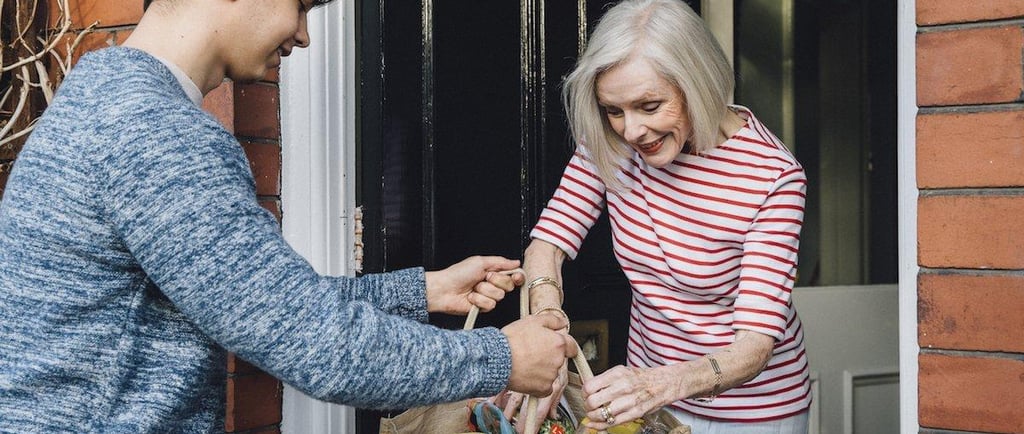
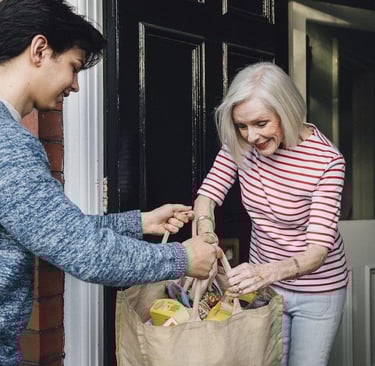
It looks like meals shared without overthinking. Someone dropping off soup because they heard you were sick. A neighbor walking your dog when you’re overwhelmed. A ride offered without needing to ask. A conversation on a bench that turns into real support.
These moments are small, but they change everything. They reduce the invisible load we carry alone. They create a sense of being held within a network of care, rather than operating as a single point of responsibility. They allow life’s harder seasons to feel less isolating. And importantly, mutual support flows in all directions.
There are times when you receive. There are times when you give. There are seasons when you are more available, and seasons when you need more from others. Over time, that exchange builds trust — not because it is perfectly balanced, but because it is consistently present.
This kind of support doesn’t emerge overnight. It grows from repeated interaction. From shared meals. From working alongside one another. From the simple act of seeing the same faces regularly enough that concern becomes natural rather than intrusive.
It grows from being known.
At Gratitude Village, this is one of the things we are intentionally designing for. Not just shared spaces, but shared rhythms. Opportunities for connection that make it easier for relationships to form — and for support to follow.
Because the goal is not to create dependence.
It is to create resilience. Resilience that comes from knowing you are not carrying everything alone. Resilience that allows people to navigate illness, transition, and unexpected challenges with more stability and less stress.
When we talk about community, it can sometimes sound abstract. But mutual support is not abstract.
It is practical.
It is human.
And for many of us, it is something we have been missing for a long time.
COMMUNITY
Join us in embracing nature, diversity and connection.
Sustainability
DIVERSITY
info@gratitudevillageco.com
720-689-4821
© 2026. All rights reserved.
AFFORDABILITY
Gratitude Village Inc. is a 501(c)3 charitable corporation (public charity) that values diversity, equity and inclusion as essential to our mission. EIN #33-2499522
Subscribe to our Substack
Refund Policy

Gratitude Village is a Proud Member of these organizations