Oct 17, 2026 IN PERSON Info Session - 10:30-11:30am Lakewood Library
Whiskers, Wings and Wagging Tails at Gratitude Village
Our latest blog post, Whiskers, Wings and Wagging Tails explores our vision for a pet-friendly, pollinator-supporting cohousing community in the Denver-metro area. From Labradoodles and Sheepadoodles to cats, birds, and future chickens, this post shares how animals are woven into the design of our mixed-income, multigenerational, Net Zero neighborhood. We highlight plans for a community dog park, catios, native landscaping for hummingbirds and bees, and thoughtful pet policies that support accessibility and harmony. At Gratitude Village Colorado, we are intentionally designing a sustainable community where people, pets, and pollinators thrive together.
Gratitude Village
3/4/20263 min read
One of the quiet joys of building Gratitude Village is realizing that we are not just designing homes for people. We are designing a neighborhood for paws, whiskers, wings and soft noses pressed against windows. We are creating space for early morning dog walks, sun-soaked cat naps, hummingbirds hovering near native flowers and maybe even the soft cluck of backyard chickens. Community is not only human. It’s ecological.
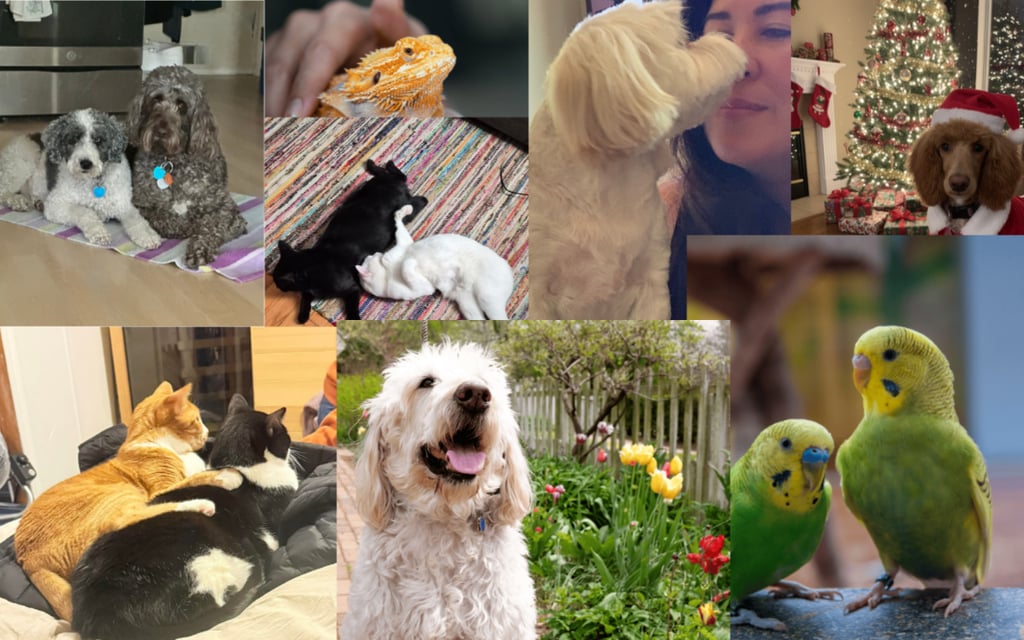
Already, our future village includes an impressive and delightful cast of characters.
There’s Ollie, a four-year-old Labradoodle weighing in at 85 pounds of enthusiastic fluff. He barks to let you know he likes you and would very much appreciate a scratch behind the ears — which can feel intimidating until you realize it’s pure affection. His sister, Nova, a three-year-old Sheepadoodle, studies him carefully and attempts to copy everything he does. When Ollie lifts his leg to pee, Nova lifts hers. When fire trucks pass by, Ollie howls proudly — and Nova joins in, though her version tends toward chaotic yips that make everyone laugh.
Then there’s Shiloh, a one-year-old Moyan Poodle with energy to spare and a zest for life that practically vibrates through the leash. Figaro, the sleek black short-hair, surveys the world with feline dignity, while his all-white companion Imani moves like a quiet cloud through the house. Mr. Boy will soon be relocating from Washington State to Colorado, joining the growing feline delegation of our future village.
Effie, a black-and-white Reiki practitioner (because of course she is), is moving from Nebraska with her brother Meatball — an orange tabby who politely signs with his paw when he is ready to accept pets. We also have birds among us: Mr. Pickles, a 12-year-old green parakeet with stories to tell, and BeeBee, a small parrot who undoubtedly has opinions. And the invitation remains open for rabbits, geckos, lizards, turtles and all the beautifully diverse companions who enrich our lives.
When we talk about building a cohousing community, we often focus on accessibility, affordability, sustainability and connection. But animals are part of that story, too. They reduce isolation. They increase movement. They spark conversation. They offer comfort and grounding across generations.
Our vision for Gratitude Village includes a thoughtfully designed dog park — not just a fenced patch of grass, but a gathering place where humans linger while dogs tumble and chase. It includes catios, allowing indoor cats to safely experience fresh air and sunshine. It includes walking paths where older adults can stroll safely with their companions and children can learn responsibility by helping with daily walks.
Beyond our pets, we are designing for pollinators and wildlife.
Native plantings will invite hummingbirds to hover and sip. Bees and moths will find habitat among thoughtfully selected flowers. We envision fruit trees and edible landscaping that support biodiversity. If the land allows, we would love to include a small chicken coop — not as a novelty, but as a nod toward food resilience and shared stewardship. And maybe the back patch by the herb garden can include a few bee hives, providing delicious honey and the calming hum of hundreds of bees buzzing as they go about their tasks.
Living with animals changes the rhythm of a place.
Morning begins with paws on pavement. Afternoons include birdsong. Evenings are softened by the presence of something warm curled beside you. In a multi-generational setting, animals create natural bridges — children asking to help feed the chickens, elders sharing stories about pets from decades past, neighbors stepping in to care for one another’s companions during travel or illness.
This is part of what it means to design a high-functioning neighborhood.
Pets remind us to move. To laugh. To forgive the occasional muddy paw print. They draw us outside. They nudge us into connection. A dog park becomes a social hub. A shared garden becomes a place where pollinators thrive. A coop becomes an informal gathering point where someone inevitably says, “Do you need eggs?”
And of course, community living also means responsibility. Clear pet policies. Shared agreements. Respect for allergies, noise and safety. Thoughtful design to balance freedom and harmony. Cohousing works because it pairs joy with structure — and that will apply to our animal companions as well.
We are building something alive.
Not sterile. Not isolated. Not disconnected from the natural world. But a neighborhood where humans and animals coexist intentionally. Where biodiversity is not an afterthought. Where a Labradoodle’s enthusiastic bark becomes part of the soundscape. Where a chaotic Sheepadoodle's howl at a passing fire truck is met with laughter instead of complaint.
When we imagine Gratitude Village, we don’t just see homes.
We see Ollie barreling toward the dog park. Nova attempting her best impression of him. Shiloh sprinting joyfully across open space. Mr. Boy sunning himself in a catio. Chickens scratching the earth. Bees moving from blossom to blossom. We hear Mr. Pickles chirping, chatting or chirrupping when the windows are open in spring and Figaro meowing melodically like his namesake.
We are not just building housing.
We are cultivating a habitat — for people, for pets and for the wider web of life that sustains us all.
COMMUNITY
Join us in embracing nature, diversity and connection.
Sustainability
DIVERSITY
info@gratitudevillageco.com
720-689-4821
© 2026. All rights reserved.
AFFORDABILITY
Gratitude Village Inc. is a 501(c)3 charitable corporation (public charity) that values diversity, equity and inclusion as essential to our mission. EIN #33-2499522
Subscribe to our Substack
Refund Policy

Gratitude Village is a Proud Member of these organizations