Sept 24, 2026 Zoom Info Session - register to get link 5:00-6:00pm
This Is Not Just Another Development Project
Cohousing communities offer more than just housing—they create environments designed to support connection, accessibility, and long-term well-being. This Is Not Just a Development Project explores how Gratitude Village is rethinking neighborhood design by integrating shared spaces, sustainable building practices, and fully accessible infrastructure to foster both independence and community. As this mixed-income cohousing community in Brighton, Colorado moves forward, this piece highlights how intentional design can serve as a foundation for belonging, resilience, and a more connected way of living.
Gratitude Village
5/10/20263 min read
At its simplest, Gratitude Village is a housing development.
There is land. There will be homes. There are plans, budgets, timelines, and all the pieces that go into creating a neighborhood. On paper, it can be described in very practical terms, much like any other residential project.
But that description doesn’t fully capture what Gratitude Village really is. Because what we are building is not just a collection of homes. It is an environment designed around how people actually live.
For many of us, the neighborhoods we live in were not intentionally designed for connection. They were designed for efficiency, privacy, and independence. Those are not inherently negative things, but over time, they have shaped a way of living that can feel isolating, even when we are surrounded by other people.
We see our neighbors, but we don’t always know them. We manage our lives within the boundaries of our own households, often carrying the full weight of daily responsibilities without much shared support. And while that model works in some ways, it also leaves gaps that many people feel but don’t always name.
This project begins with a different premise.
What if the neighborhood itself could support connection, without requiring it? What if the design of the space made it easier to know the people around you, to share resources, and to be part of something that extends beyond your front door?
That shift may seem subtle, but it changes a lot.
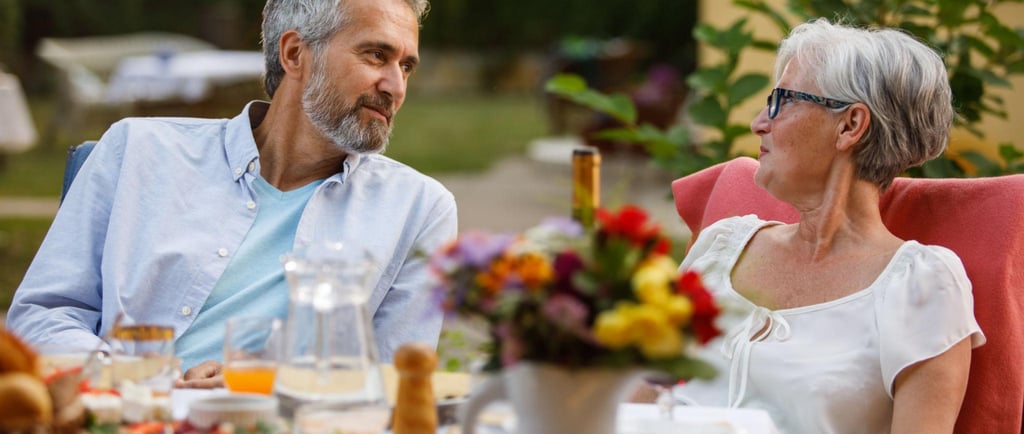
It changes how people interact day to day. It creates more opportunities for informal connection, whether that’s a conversation in a shared space, a meal together, or simply recognizing the people you pass on a regular basis. Over time, those small moments build familiarity, and from that, a sense of belonging.
That belonging has practical implications as well.
When people know each other, they are more likely to support one another in everyday ways. That might look like helping with a meal during a busy week, checking in when someone is going through a difficult time, or sharing responsibilities that would otherwise fall entirely on one household. These are not formal systems, but they are meaningful.
In that sense, this is not just about housing. It is about creating a form of preventative social infrastructure — something that supports well-being before there is a crisis, rather than reacting after one.
The same is true when it comes to sustainability and accessibility.
Designing homes and shared spaces that are energy-efficient, durable, and responsive to changing needs is not just a technical decision. It is about creating a place that can support people over time, across different stages of life, without requiring constant adaptation or relocation.
Accessibility, in particular, is often treated as a specialized feature, something added for a specific group of people. Our approach is different. By designing the entire community to be accessible from the beginning, we are creating a place that works for more people, in more situations, without requiring separate solutions.
That, too, is part of what makes this more than a development project. It is an attempt to rethink some of the underlying assumptions about how neighborhoods are created and what they are meant to do. Not in a way that is idealistic or perfect, but in a way that is practical and grounded in everyday life.
There will still be trade-offs. There will still be challenges. This will not be a perfect place, because no place is. But it is being built with intention, and that intention shapes the outcome.
For the people who choose to be part of it, this is not just about where they live. It is about how they live.
And for those who are watching from the outside, it may be something else as well. A glimpse of what is possible when we start to think about housing not just as shelter, but as a foundation for connection, resilience, and long-term well-being.
That’s what makes this different. And that’s why it matters.
COMMUNITY
Join us in embracing nature, diversity and connection.
Sustainability
DIVERSITY
info@gratitudevillageco.com
720-689-4821
© 2026. All rights reserved.
AFFORDABILITY
Gratitude Village Inc. is a 501(c)3 charitable corporation (public charity) that values diversity, equity and inclusion as essential to our mission. EIN #33-2499522
Subscribe to our Substack
Refund Policy
Gratitude Village is a Proud Member of these organizations