Oct 6, 2026 Zoom Info Session - register to get link 5:00-6:00pm
What Happens Between “Interested” and “All In”?
Exploring cohousing is rarely a simple yes-or-no decision. What Happens Between “Interested” and “All In”? reflects on the emotional and practical middle ground many people experience as they consider a more connected way of living. From questions about finances and timing to deeper reflections on belonging, community, and lifestyle, this piece explores why meaningful change often unfolds gradually. As Gratitude Village Colorado continues building a mixed-income, fully accessible cohousing community in Brighton, this article offers an honest look at the hopes, hesitations, and human realities behind choosing a different kind of neighborhood.
Gratitude Village
5/25/20265 min read
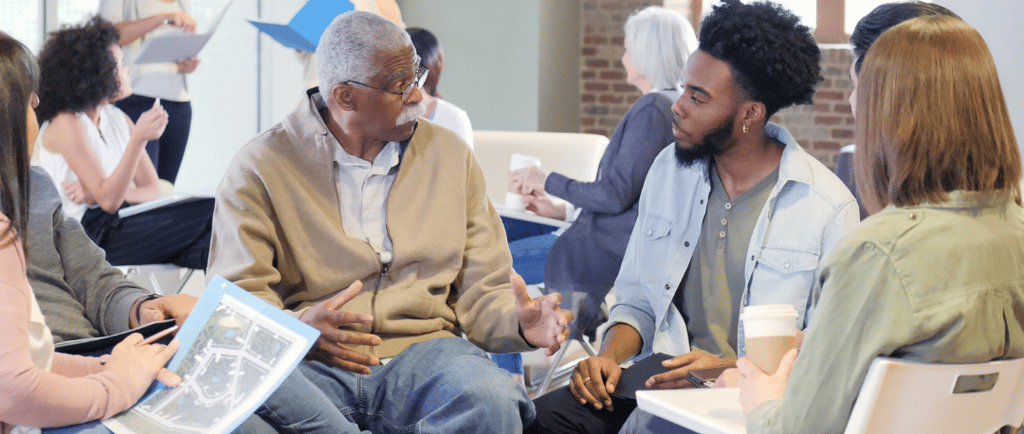

Most people do not discover cohousing and immediately decide to change their lives. The process is usually much slower, more emotional, and more complicated than that. Someone attends an information session, watches a video, or stumbles across an article online and feels something stir. They begin imagining a different kind of future—one with more connection, more support, and perhaps a stronger sense of belonging than modern neighborhoods often provide. Then, almost immediately, practical questions begin to surface. Could we actually do this? Would we fit in? What would we be giving up? Would this really work for our family, our finances, or our stage of life?
At Gratitude Village, we have seen this process unfold again and again. People often leave an information session energized and hopeful, only to find themselves wrestling with uncertainty the next day. One partner may feel excited while the other remains cautious. Someone may love the idea philosophically but struggle with the financial realities of making a move. Others may find themselves unexpectedly emotional, realizing how deeply they have been longing for greater connection without fully recognizing it before. That middle space between curiosity and commitment can feel uncomfortable, but it is also incredibly normal. In many ways, it connects to a larger question we explored in our blog What if We Weren't Meant to Live This Way?—whether modern life has quietly normalized a level of isolation and disconnection that many people no longer want to accept.
Part of the challenge is that cohousing asks people to think differently about what a neighborhood can be. Most of us were raised with a fairly standard picture of adulthood and success. We are taught to prioritize independence, privacy, and self-sufficiency. We buy homes designed around separation, drive into garages that close behind us, and often know very little about the people living nearby. At the same time, many people quietly carry the weight of loneliness, burnout, and the constant pressure of trying to manage everything alone. According to former U.S. Surgeon General Vivek Murthy, loneliness and social isolation have become significant public health concerns in the United States, affecting both mental and physical well-being. We have written previously about both How Cohousing Offers a Path to Connection and The Costs of Lacking Social Connections: A Hidden Crisis , because this issue extends far beyond simply feeling lonely. It affects health, resilience, and our broader sense of belonging in the world.
Cohousing does not magically solve those problems, but it does invite people to imagine another way of living. That invitation can be both exciting and unsettling. People begin picturing shared meals, children playing together, conversations on walking paths, or aging in a place where they are known by neighbors rather than isolated from them. At the same time, they may worry about privacy, social expectations, finances, or whether they are truly ready for that kind of change. Sometimes the hesitation is practical. Sometimes it is emotional. Often, it is both. We discussed this more deeply in our blog, The Dinner Bell Rings – Why Common Meals Matter.
There is also a difference between liking the idea of cohousing and imagining yourself inside of it. The first reaction is often intellectual. People appreciate the sustainability goals, the accessibility features, the sense of community, or the idea of reducing isolation. But eventually the question shifts from “Do I think this is a good idea?” to “Could this actually become my life?” That is a much bigger question. It touches finances, relationships, routines, future plans, and deeply personal hopes about how someone wants to live.
For some people, the process moves relatively quickly. They visit a community or attend a few events and immediately feel at home. For others, the journey takes months or even years. They continue showing up, asking questions, reading updates, and cautiously exploring what participation might look like. Some join as Exploring Members first because they want time to build relationships and better understand the process before making a larger commitment. Others stay connected from a distance while they work through timing, employment transitions, caregiving responsibilities, or conversations with family members. None of those paths are wrong.
One of the things that makes cohousing different from traditional real estate development is that people are not simply evaluating a floorplan or a location. They are considering a lifestyle and a community culture. That naturally takes more time. Buying a traditional home often involves comparing prices, commute times, school districts, and square footage. Joining a cohousing community involves all of those considerations, but it also asks deeper questions. How much connection do I want in my daily life? What kind of neighborhood do I want to grow older in? How do I balance independence with interdependence? What kind of environment do I want children to grow up in? Many of these questions connect closely to what we explored in A Neighborhood Where You Belong, particularly the idea that people are often searching for more than housing—they are searching for connection, familiarity, and a sense of being known.
At Gratitude Village, we try to honor this middle stage rather than rush people through it. We understand that thoughtful decisions take time, especially when they involve major life transitions. That is part of why we offer opportunities for people to engage gradually through information sessions, workshops, volunteer opportunities, and Exploring Memberships. Relationships are not built overnight, and trust rarely develops through a single conversation. In many ways, future residents are not only evaluating the community—they are also learning more about themselves and what they truly value. For those still exploring what makes cohousing fundamentally different from traditional neighborhoods, our blog How Cohousing Works (And Why It Feels So Different) offers a deeper look at the structures and rhythms that shape daily life in intentional community.
There can also be grief hidden inside the process of considering a different future. Some people realize that they have spent years feeling disconnected without fully acknowledging it. Others begin recognizing how much modern life has normalized isolation and exhaustion. Still others find themselves mourning the fact that many neighborhoods no longer function as true communities. These realizations can be emotional because they touch something deeper than housing. They touch our human need for belonging, support, purpose, and connection.
Of course, cohousing is not the right fit for everyone. Some people ultimately decide they prefer more privacy, less collaboration, or a different type of living arrangement. Others discover that the timing simply is not right. That is okay too. The goal is not to convince every person who expresses interest to immediately become “all in.” The goal is to create enough space, honesty, and openness for people to thoughtfully explore whether this way of living aligns with the life they want to build.
Sometimes the path toward a different kind of life begins quietly. It starts with curiosity, a conversation after an event, or a lingering thought that refuses to go away. It grows slowly through questions, reflection, relationships, and imagination. The middle ground between “interested” and “all in” may feel uncertain at times, but it is often where the most meaningful transformation begins.
COMMUNITY
Join us in embracing nature, diversity and connection.
Sustainability
DIVERSITY
info@gratitudevillageco.com
720-689-4821
© 2026. All rights reserved.
AFFORDABILITY
Gratitude Village Inc. is a 501(c)3 charitable corporation (public charity) that values diversity, equity and inclusion as essential to our mission. EIN #33-2499522
Subscribe to our Substack
Refund Policy
Gratitude Village is a Proud Member of these organizations