Nov 3, 2026 Zoom Info Session - 5:00-6:00pm REGISTER to get the link!
Before the First Shovel: Why Building a Neighborhood Starts with Spreadsheets
When people imagine a new neighborhood taking shape, they picture construction crews, heavy equipment, and homes rising from the ground. But long before the first shovel ever breaks the soil, another kind of construction is already underway. In this behind-the-scenes look at Gratitude Village, we explore the planning, partnerships, financial strategy, and countless hours of preparation that lay the foundation for everything that follows. Because great neighborhoods aren't built overnight—they're built through shared vision, thoughtful decisions, and the quiet work that transforms a dream into a place people will one day call home.
Gratitude Village
7/26/20264 min read

Every month or so, someone asks me essentially the same question.
"So, when are you going to start building?"
Sometimes it's phrased as, "What's the project timeline?" or "When do you expect people will move in?" But it's really the same question. I always smile because I know exactly what they're imagining. They picture excavators arriving on the property, foundations being poured and walls beginning to rise from the ground. Those are exciting milestones, and I can't wait to celebrate them. But my answer is usually the same: "We're already building." Just not in the way most people expect.
One of the things I've learned during the journey to create Gratitude Village is that communities come to life twice. The second time is the one everyone sees—the homes, the streets, the gardens and the Common House. The first time happens much more quietly. It takes place in planning meetings, engineering reports, financial models, legal documents and conversations around conference tables. Long before the first shovel ever breaks ground, the foundation of a neighborhood is being carefully designed, tested, refined and strengthened. It's not the kind of work that makes headlines, but it's the work that makes everything else possible.
That's especially true for a community like Gratitude Village. If our goal were simply to build another subdivision, the process would be much more straightforward. But we're creating something different: a multigenerational, mixed-income, Zero Energy cohousing community where people of different ages, incomes, and abilities can live in a neighborhood intentionally designed for connection.
If you've read my earlier post, Building Community Before the Homes Exist, you know that we've always believed community should come first. Future neighbors begin building relationships, learning together, and shaping the village long before anyone receives the keys to their home. It only makes sense that the planning behind the project should reflect that same thoughtful, long-term approach. Creating that kind of community requires more than great architecture. It requires a financial foundation that is just as intentional as the physical one.
People are often surprised to learn that there isn't one giant check waiting to fund a neighborhood like this. Instead, projects like Gratitude Village are built using what developers call a capital stack—a combination of funding sources that work together over time. Resident equity, traditional financing, grants, philanthropic support, affordable housing programs and private investment each have a different purpose and arrive at different stages of the project. Think of it less as finding one source of funding and more as assembling a puzzle. Or as one of our advisors says, "turning the Rubik's cube." Each piece matters, but none of them creates the complete picture on its own.
As I wrote in The Spaces Between the Homes, what truly makes a neighborhood special isn't simply the homes themselves—it's the connections that happen between them. The financial planning follows that same philosophy. Every funding decision, every partnership and every financial model is designed to support the kind of community we're creating: one where neighbors know one another, homes remain attainable and the spaces that bring people together can thrive for generations. When the pieces of the financial puzzle fit together, they don't just fund buildings—they help create the conditions for belonging.
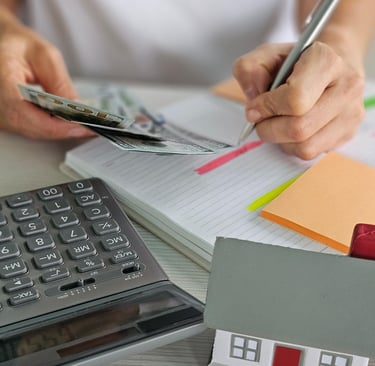
That's why we've been spending so much time this summer working alongside experienced partners like Chestnut Ridge Consulting and Trellis Housing Partners. Together, we're refining financial projections, evaluating development assumptions, strengthening our affordable homeownership strategy, and exploring financing opportunities that align with our long-term vision. This process, known as underwriting, isn't simply about balancing spreadsheets. It's about asking hard questions now so we can make wise decisions for the future. Are we planning responsibly? Have we accounted for changing market conditions? Can we remain true to our mission while creating a financially sustainable community? The more carefully we answer those questions today, the stronger Gratitude Village will be tomorrow.
What I've come to appreciate is that these spreadsheets represent far more than numbers. They represent future neighbors sharing meals in the Common House, children playing safely on the village green, older adults remaining connected instead of aging in isolation and young families finding a path to homeownership they may have thought was beyond their reach. Every financial model we refine, every partnership we strengthen and every funding opportunity we pursue helps protect those future moments. Good financial planning isn't separate from community building—it is community building.
That's one of the reasons I'm so grateful for the incredible team that has gathered around this project. Architects, engineers, attorneys, financial consultants, affordable housing specialists, city staff, volunteers, board members, donors and future residents are all contributing their expertise long before there is anything visible to point to on the property. Each person brings a different perspective, and together they're helping build something much larger than a neighborhood. They're helping create a community designed to thrive for generations.
As we move closer to our anticipated land closing, it's natural to look forward to the day construction finally begins. I know I do. I've also gained a new appreciation for the quieter work that comes first. Years from now, people will walk through Gratitude Village and admire the homes, gardens, pathways and gathering spaces. They'll see a beautiful neighborhood and assume it all began when the first shovel broke ground.
Those of us who have been on this journey will know differently. As I reflected in When a Dream Becomes a Place, neighborhoods don't spring into existence the day people move in. They evolve over months and years through shared vision, thoughtful planning, trusted partnerships and countless decisions that may never be visible to the people who eventually call them home. Every engineering drawing, financial model, grant application, legal agreement and community conversation becomes part of that story. Each one is another step in transforming an idea into a place where people will one day gather, celebrate milestones, support one another and truly belong.
We'll remember that Gratitude Village was built long before construction started. It was built through careful planning, trusted partnerships, difficult conversations, shared vision, and thousands of hours of thoughtful work that few people will ever see. The first shovel will mark the beginning of construction, but it won't mark the beginning of the village. That story has already been unfolding for quite some time, one conversation—and yes, one spreadsheet—at a time.
COMMUNITY
Join us in embracing nature, diversity and connection.
Sustainability
DIVERSITY
info@gratitudevillageco.com
720-689-4821
© 2026. All rights reserved.
AFFORDABILITY
Gratitude Village Inc. is a 501(c)3 charitable corporation (public charity) that values diversity, equity and inclusion as essential to our mission. EIN #33-2499522
Subscribe to our Substack
Refund Policy

Gratitude Village is a Proud Member of these organizations