Oct 22, 2026 Zoom Info Session - 5:30-6:30pm REGISTER to get the link!
Community Is Powerful — But It Isn't Magic
Community doesn't happen simply because people live next door to one another—it grows through shared experiences, meaningful conversations, and a willingness to invest in relationships. In this post, we explore why intentional community requires more than thoughtful neighborhood design, and how Gratitude Village is working to build connection long before the first homes are constructed. Discover why the strongest neighborhoods aren't created by chance—they're built one relationship at a time.
Gratitude Village
7/18/20265 min read

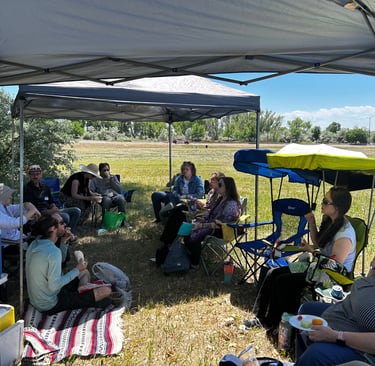
Over the years, I've had the opportunity to visit a number of cohousing communities. Every one of them has been different. Some were large, others were small. Some had children running through the common green while others were primarily older adults. The architecture, layout, and personalities varied from place to place, but there was one thing they all seemed to have in common. People knew one another. Not just their neighbors' names, but their stories. They stopped to chat on the pathways, shared meals together, celebrated birthdays, pitched in on projects, and noticed when someone hadn't been around for a few days. Every time I visited one of these communities, I left inspired—but I also came away with an important realization.
The sense of connection I experienced wasn't created by the buildings themselves. Beautiful Common Houses, inviting walking paths, front porches, and shared gardens certainly encouraged people to spend time together, but they weren't the reason community existed. The real difference was the people and the choices they made every day. They chose to eat together, volunteer together, solve problems together, and invest in relationships over time. That realization built on a journey that began years earlier, when I was simply searching for a community to call home, a story I shared in When a Dream Becomes a Place.
Community is powerful, but it isn't magic.
One of the things I hear most often when people first learn about cohousing is, "It sounds wonderful." I couldn't agree more. The idea of living in a neighborhood where people know and care about one another is incredibly appealing, especially at a time when loneliness and social isolation have become increasingly common. Many of us long for neighbors we can count on, places where children can safely play together, and communities where people genuinely feel like they belong. Cohousing offers a compelling vision of that kind of life, but it's important to understand why it works.
Community doesn't happen because people move next door to one another. It doesn't appear simply because homes are arranged around a common green or because there's a beautiful building where everyone gathers for dinner. Those physical spaces matter, and thoughtful neighborhood design makes connection much easier, but they are only part of the equation. Community happens because people intentionally invest time, communication, and care into building relationships. Like any meaningful relationship, a healthy neighborhood grows through countless small interactions that happen day after day and year after year.
That's one of the reasons we've said from the beginning that Gratitude Village isn't simply about building homes. We're building a neighborhood. In fact, the relationships we're creating today are just as important as the homes we'll eventually build, something we explored further in Building Community Before the Homes Exist. In a traditional subdivision, construction usually comes first and relationships develop later—if they develop at all. At Gratitude Village, we're intentionally reversing that process. Long before anyone receives the keys to a new home, future neighbors are already getting to know one another. Through monthly meetings, design workshops, volunteer opportunities, shared meals, and informal conversations, we're beginning to build the relationships that will ultimately become the foundation of the community itself. Our recent Site Design Workshop was a wonderful example of this process in action, which we shared in Shaping the Village Together. By the time construction is complete, we hope many residents will already know one another's strengths, interests, dreams, and even a few of each other's quirks.
Of course, that doesn't mean everyone will always agree. In fact, one of the biggest misconceptions about intentional community is that successful communities don't experience conflict. The opposite is actually true. Every healthy community includes people with different personalities, backgrounds, communication styles, priorities, and perspectives. Disagreements are inevitable anytime people care deeply about something they're building together. The goal isn't to eliminate conflict; it's to learn how to work through it with respect, curiosity, and a shared commitment to preserving relationships even when opinions differ.
That's one reason Gratitude Village has chosen to use sociocracy as its governance model once the community has grown (right now with a small group of Founders we are using modified consent). We'll explore sociocracy more fully in a future post, but its basic philosophy is surprisingly simple. It provides a structured way for people to participate in decisions, listen carefully to one another, and move forward through consent rather than winners and losers. Like any governance model, it isn't perfect, but it reflects an important belief: healthy communities don't happen by accident. They're intentionally designed—not only through architecture and site planning, but through the way people communicate, make decisions, and share responsibility for the life of the neighborhood.
The same principle can be seen in many of the traditions found in cohousing communities around the world. Shared meals aren't simply about convenience or saving time in the kitchen. They create regular opportunities for neighbors to gather, celebrate milestones, laugh together, and check in on one another. Community workdays aren't just about planting gardens or maintaining shared spaces. They build trust while giving people a chance to accomplish something meaningful together. Participation isn't about fulfilling an obligation or checking a box. It's about recognizing that every person brings unique talents, experiences, and perspectives that strengthen the entire community.
Perhaps the most important ingredient of all is something that's harder to design into a neighborhood: vulnerability. Real belonging requires us to let people know us beyond casual conversations. It means asking for help when we need it, offering help when we're able, and recognizing that none of us has to navigate life entirely on our own. Every one of us will experience seasons of celebration and seasons of hardship. We'll all encounter illness, loss, change, aging, unexpected opportunities, and unexpected challenges. A community can't prevent those experiences, but it can change how we move through them. Knowing your neighbors—and knowing they know you—creates a kind of resilience that's becoming increasingly rare in modern neighborhoods.
As we continue developing Gratitude Village, we're reminded that the physical neighborhood and the social neighborhood are being built at the same time. Over the coming months, we'll also explore why governance, accessibility, and thoughtful neighborhood design are just as important as the homes themselves. The homes, Common House, gardens, and pathways will eventually provide the setting, but the relationships formed along the way will give those places their meaning. That's why we often say that the neighborhood begins long before construction.
Community doesn't guarantee happiness. It won't eliminate loneliness overnight or solve every disagreement. It isn't perfect because people aren't perfect. But it does offer something many of us have been missing for a long time: the opportunity to be known, to contribute, and to belong. That's the kind of neighborhood we're working to create at Gratitude Village. Not a perfect community, but a real one—one built intentionally, one relationship at a time.
In many ways, that's exactly what we've been doing since our very first community meeting—building the neighborhood long before we build the homes.
COMMUNITY
Join us in embracing nature, diversity and connection.
Sustainability
DIVERSITY
info@gratitudevillageco.com
720-689-4821
© 2026. All rights reserved.
AFFORDABILITY
Gratitude Village Inc. is a 501(c)3 charitable corporation (public charity) that values diversity, equity and inclusion as essential to our mission. EIN #33-2499522
Subscribe to our Substack
Refund Policy

Gratitude Village is a Proud Member of these organizations