Oct 17, 2026 IN PERSON Info Session - 10:30-11:30am Lakewood Library
What Due Diligence Actually Looks Like
Creating a cohousing community involves far more than finding land and designing homes. What Due Diligence Actually Looks Like offers a behind-the-scenes look at the extensive research, planning, analysis, and collaboration required before a project like Gratitude Village can move forward responsibly. From zoning and infrastructure studies to environmental reviews, financial modeling, and city coordination, this article explores the often invisible work that transforms a hopeful vision into a viable, long-term community. As Gratitude Village Colorado continues planning its mixed-income, fully accessible cohousing neighborhood in Brighton, this piece highlights why thoughtful due diligence is not a delay in the process—it is the foundation of building a resilient and sustainable community.
Gratitude Village
5/30/20265 min read
One of the questions we hear most often at Gratitude Village is some version of: “What happens behind the scenes before a community like this can actually be built?” Most people understand that there are financial and legal steps involved in development, but few realize how much investigation, analysis, coordination, and risk evaluation happens long before construction ever begins. In many ways, the visible part of a project is only the tip of the iceberg. Beneath every future walking path, common house, and home site is an enormous amount of due diligence designed to answer a fundamental question: Is this project truly feasible, responsible, and sustainable over the long term? In many ways, this reflects something we discussed previously in This Is Not Just Another Development Project—that Gratitude Village is being designed around long-term well-being, connection, and sustainability rather than simply maximizing units on a parcel of land.
When people hear the phrase “due diligence,” it can sound abstract or overly technical. In reality, it simply means taking the time to carefully investigate a property, a plan, and a development process before making major financial commitments. Good due diligence is what helps communities avoid costly surprises later. It allows developers, cities, lenders, consultants, and future residents to better understand both the opportunities and the risks associated with a project. As we discussed in What Happens Between “Interested” and “All In”?, thoughtful decision-making takes time, especially when people are investing emotionally and financially in a very different way of living. For a community like Gratitude Village, due diligence also reflects something deeper: a responsibility to future residents, donors, and supporters to move thoughtfully rather than recklessly.
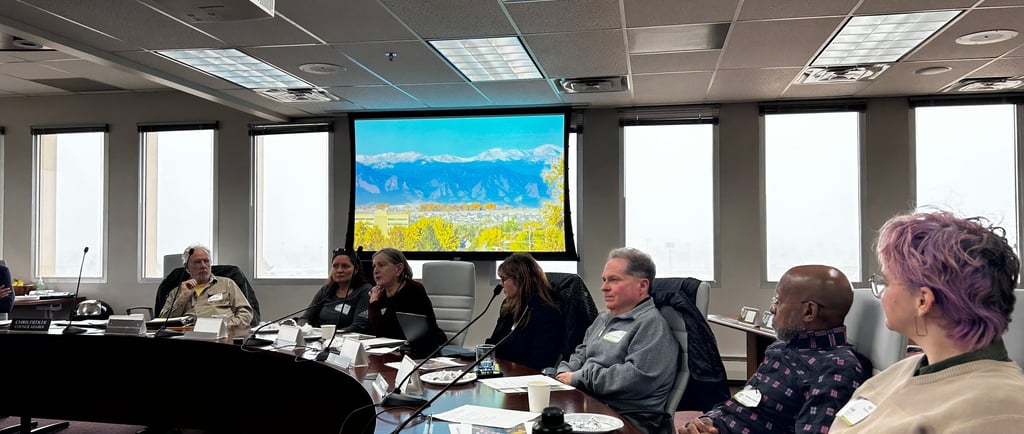
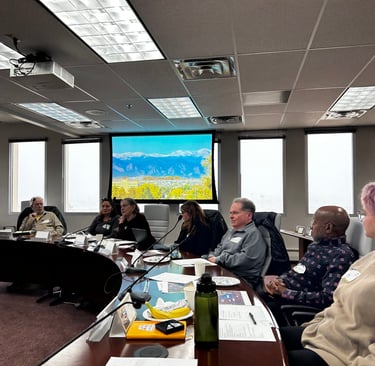
At Gratitude Village, due diligence has included far more than simply finding land we liked. Once we identified the Brighton property as a strong potential fit, the real work accelerated quickly. We began evaluating zoning and land use regulations, utility access, roadway connections, drainage concerns, infrastructure costs, and development feasibility. We met with city staff, planners, engineers, architects, and development advisors to better understand how the site could realistically support the kind of mixed-income, fully accessible cohousing community we envision. Every answer uncovered new questions, and every layer of information helped sharpen our understanding of what would actually be required to move forward responsibly.
One major part of due diligence involves understanding the physical realities of the land itself. Before homes can ever be designed or built, engineers and consultants need to study soil conditions, grading, drainage, water flow, environmental concerns, and utility infrastructure. Geotechnical studies help determine whether the soil can properly support future buildings and infrastructure. Environmental reviews look for potential contamination or other concerns that could impact development. Civil engineers evaluate road access, stormwater systems, and how utilities like water and sewer might connect to the site. These decisions may sound highly technical, but they directly shape the kinds of human interactions that happen within a neighborhood—from walking paths and gathering spaces to the shared areas between homes that encourage connection and daily interaction. None of this work is particularly glamorous, but it is essential because mistakes at this stage can create enormous financial and structural problems later.
There is also a significant financial side to due diligence that many people never see. Early development budgets require detailed analysis of land costs, tap fees, infrastructure expenses, professional services, permitting, insurance, financing, and construction assumptions. Small changes in one category can dramatically affect overall affordability. A community might discover that roadway improvements cost more than expected, or that utility upgrades significantly increase site expenses. Teams often create multiple financial scenarios to test whether a project can remain viable under different conditions. This process is especially important for Gratitude Village because maintaining long-term affordability is central to our mission, not simply an afterthought.
Zoning and entitlement work also play a major role in the process. Many municipal systems were not originally designed with cohousing or collaborative neighborhoods in mind, which means projects like ours often require extensive conversations with planning staff and city officials. Part of the challenge is that cohousing functions differently from conventional subdivisions or apartment developments, something we explored more deeply in How Cohousing Works (And Why It Feels So Different). Even supportive municipalities often need time to evaluate how these differences affect density, parking, accessibility, pedestrian circulation, mixed-income housing, and shared amenities. These questions all become part of the conversation. In Brighton, we have been encouraged by the city’s willingness to engage thoughtfully with our vision, but these discussions still require careful preparation, research, and collaboration.
Another important aspect of due diligence involves assembling the right team. No single person can carry a project like this alone. Architects, civil engineers, land use attorneys, geotechnical consultants, development advisors, financial analysts, contractors, surveyors, and municipal staff all contribute pieces of the puzzle. One of the biggest lessons we have learned is that successful development depends heavily on relationships and communication. In many ways, the process of building community begins long before homes are constructed, through the conversations, collaboration, and trust-building that happen during the planning process itself. Projects move forward when people are willing to collaborate, solve problems creatively, and approach challenges with patience and professionalism.
At times, due diligence can feel slow from the outside. People naturally want to know when homes will be built, when floorplans will be released, or when construction will begin. We feel that excitement too. But there is also a very real tension between wanting to move thoughtfully and the deadlines established in the purchase and sale agreement with the property seller. Development timelines do not pause simply because more questions arise, and balancing careful investigation with contractual milestones can sometimes feel incredibly challenging. At the same time, rushing through the investigative phase of development can create much larger problems later. Thorough due diligence reduces uncertainty, strengthens financial planning, and helps communities make informed decisions rather than emotional ones. In many ways, this stage is not a delay in the process. It is the process. Ultimately, the goal is not simply to build housing, but to create the kind of environment where people genuinely feel connected, supported, and known by their neighbors, something we explored further in A Neighborhood Where You Belong.
Careful planning reflects those same principles. It means asking difficult questions early rather than ignoring them. It means balancing optimism with realism. It means recognizing that creating a healthy, sustainable, and accessible neighborhood requires more than a beautiful vision. It requires systems, expertise, accountability, and an enormous amount of behind-the-scenes work that future residents may never fully see once the homes are finally complete.
At Gratitude Village, we often say that we are not just building homes. We are building the foundation for a different way of living together. That foundation begins long before construction starts. It begins with conversations, studies, meetings, spreadsheets, engineering reports, zoning discussions, environmental reviews, financial modeling, and countless hours of collaborative problem-solving. None of those pieces are particularly flashy on social media, but they are part of what transforms a hopeful vision into something real.
For many future residents, the due diligence stage may not be the most exciting chapter of the journey. Yet in some ways, it may be one of the most important. Every study completed, every question asked, and every challenge worked through represents another step toward creating a community designed not only to inspire people emotionally, but also to function responsibly and sustainably for decades to come.
COMMUNITY
Join us in embracing nature, diversity and connection.
Sustainability
DIVERSITY
info@gratitudevillageco.com
720-689-4821
© 2026. All rights reserved.
AFFORDABILITY
Gratitude Village Inc. is a 501(c)3 charitable corporation (public charity) that values diversity, equity and inclusion as essential to our mission. EIN #33-2499522
Subscribe to our Substack
Refund Policy

Gratitude Village is a Proud Member of these organizations